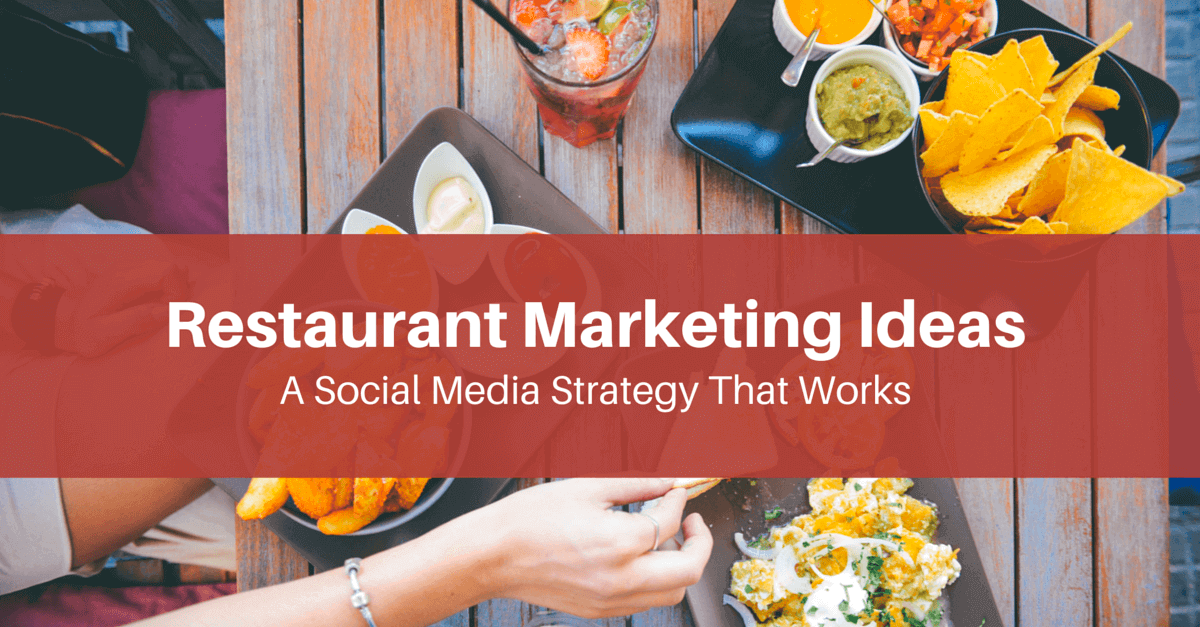
Your Establishment is present on social networks, but it does not give any results? Would you like to know the strategy of social media marketing to attract more customers to your restaurant? These questions are quite common among restaurant managers on the Internet but have not yet reaped the benefits.
If you want the best Services of Social Media Marketing in Pakistan, Contact us.
While a successful internet presence depends on several variables, some key points can make the difference in using social media as a sales tool if you work on it patiently and regularly.
These key points are:
1- Choose your Networks Strategically
Your restaurant doesn’t need to account on all social networks if you aren’t running any of them properly. It is, therefore, essential to determine the communities to which you will target your efforts. Also, some social networks will correspond better to the objectives you set through their interaction mechanisms. The networks most used in catering are:
Facebook :
It is the social media platform with the most users and the most possibilities for interaction. It’s not sufficient to have a Facebook page, fill in all the required data, and share information about your restaurant from time to time. We have to create a community. To do this, you need to publish various content that involves the participation of those who follow you, for example, photos offering different dishes for the new menu, asking customers to vote (by “likes”) for the dishes that they prefer. You can also ask them to give ideas for new creations or participate in a competition for the winning dish to bear their name. You can, in particular, consult the page to Sushi in London, whose content is very lively. The marketing strategy of this restaurant chain is to attract a young audience. Its Facebook page, therefore, offers stimulating content (contests, motivating photos, images of good understanding among staff, relevant information, humor, discounts, and promotions) with a very natural tone.
Instagram:
It is normal to use this social network to post photos and short videos of your products and services. But the current trend is to show the human side of your restaurant. If you want to retain your customers, show the true face of your Establishment, the processes used to serve your dishes, the activity of your staff, special events, etc., to prove to your followers that they are part of the big one—family from your restaurant. For example, the Instagram account of the Balls restaurant in Paris reflects this proximity, with good taste and a style of its own.
Twitter:
This network is perfect for attracting customers and communicating in real-time during your events. It also helps attract executives or employees at lunchtime.
Thanks to its immediacy, you can use it to inform your followers about your daily activities and involve them in it. This is how chef Miquel Soria proceeds, who constantly details his movements on his Twitter account, with good results.
Google +:
This is Google’s social network, which has priority in the results of its search engine. So, for your restaurant to appear in Google, it is fundamental to have an active Google Plus account and regularly share relevant content with your followers. It is essential to include hashtags with your keywords in the description of your posts. You will gain visibility.
TripAdvisor:
It is the world’s largest travel community. It is a great way to get direct advertising, gain visibility, and attract new customers by word of mouth to the hotel and restaurant market. Users rate you and leave their opinion about your Establishment, and can ask questions about your restaurant. This allows you to display yourself by paying attention to the customer and analyze comments to improve your restaurant.
2- Publications Specific to Each Network
The settings, users, and subjects are different for each social network. So while it may seem beneficial to make one post and share it across all networks, it doesn’t always work well in marketing for your restaurant. Consider, in particular, the fact that to see a post posted on your Facebook wall, you sometimes have to first register on an Instagram account. This generates counterproductive frustration. Twitter posts full of hashtags shared on Facebook also don’t make much sense.
The schedules and regularity of publications also vary for each of these networks. It is, therefore, necessary to adapt the texts to each account and to program different publications for each network. Content management tools such as Hootsuite can help you with this task to save time and achieve better results.
3- Give your Customers your Full Attention
A study of the agency The Northridge Group reveals that 17% of users who ask questions on social networks wish them to respond immediately. In comparison, 32% of these potential customers expect one day, and 35% a week or more. Thus, if you respond to customer demands quickly and efficiently, you will stand out and gain a significant competitive advantage. On social media, it’s best to respond to all user contributions, whether they’re comments or private messages, and do it quickly. You can schedule times when you check your social accounts to respond to customers. It generates trust, strengthens interactions, and shows your involvement in your restaurant’s marketing.
4- Promote your Social Accounts in your Establishment
Include the addresses of your social network accounts in your decoration (frames, slates), à la carte, or the bill. This is the minimum to link your online and offline communications. Then you can get creative in leveraging your food court as a showcase for your virtual accounts. The team at the Restaurant Panenka in Madrid devised a very interesting strategy for its inauguration in 2014. They placed two screens that displayed real-time interactions on social networks, encouraging customers to participate. Ninety days later, they were collecting over a million posts on Twitter alone. The advertising impact has been enormous.
You can also offer a social WiFi network, which offers customers a free Internet connection in your restaurant in exchange for their data and actions to be carried out on your social networks. For the person to log in, for example, they could subscribe to your Facebook page and share a post indicating that they are in your restaurant. You could also offer a discount against these posts, in a win-win approach.
5- Involve your Staff
The promotion begins within the restaurant itself. Encourage your staff to open their accounts, where they can share content from your restaurant pages and actively contribute. If the people who work with you are fans of your restaurant, you are consistent in your posts. It’s a great way to project an image of harmony and authenticity.
Finally, remember that the essentials in using social media for restaurant marketing purposes are regularity and planning. Start by establishing clear goals for each social network, defining the content sharing strategy, creating a program for production, publication, responding to customers, and viewing results on an ongoing basis. Are you ready to bring your social networks to life?
 Wisdom of Life