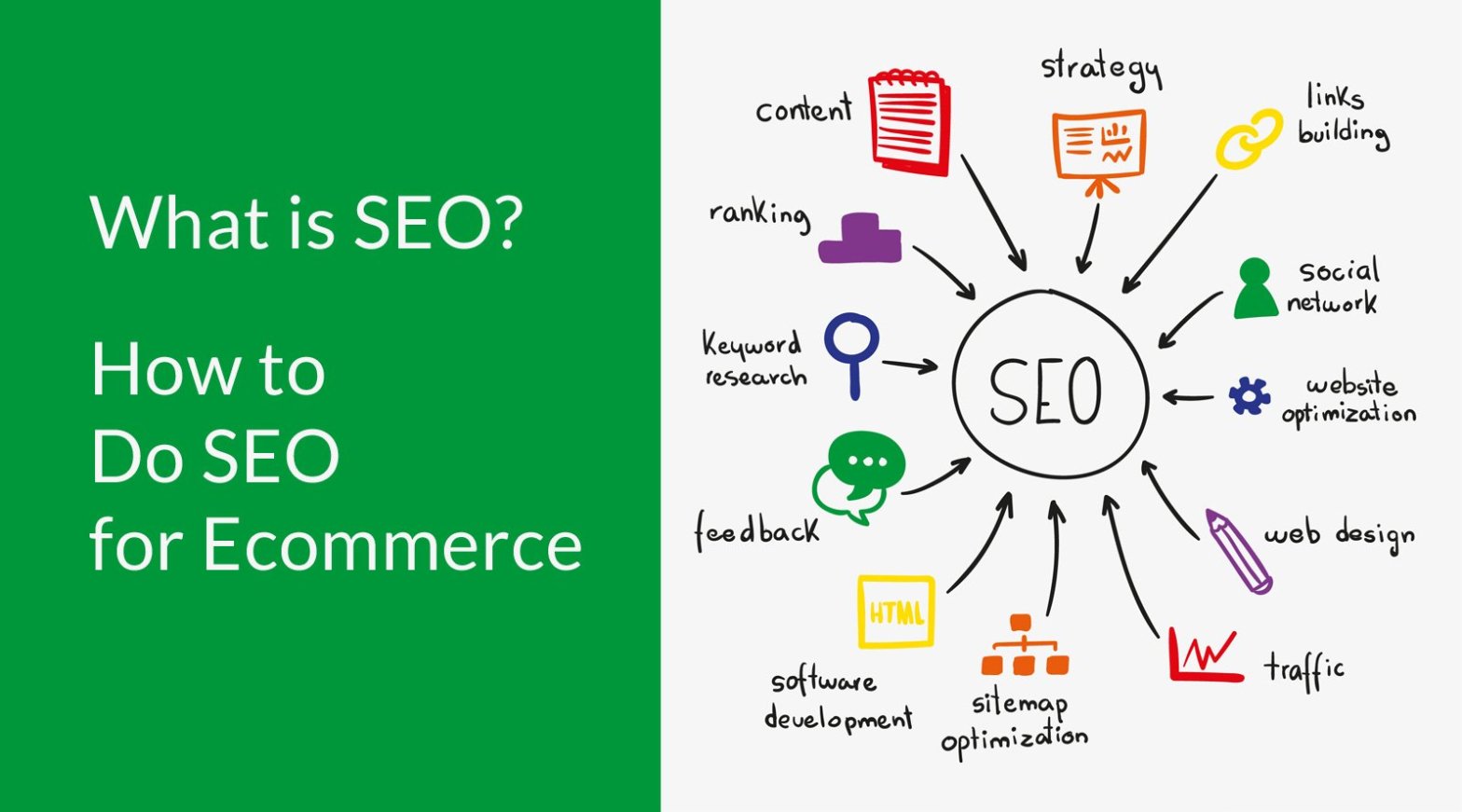
Time for practice has come! Next, we are going to review the stages of an SEO strategy for virtual stores so that you can start working right now.
1. Set a SMART goal for your strategy
The first thing you should do in an SEO strategy is to define the goal you want to achieve.
To do this, setting SMART objectives is ideal because, with them, you can keep an organized follow-up of your progress.
SMART objectives are:
- specific,
- measurable,
- achievable,
- realistic,
- a defined period of time.
2. Define the keywords for your products
After establishing the strategy’s overall goal, the next step is to take care of keyword analysis. This stage is the backbone of every e-commerce SEO strategy.
In particular, keywords for e-commerce focus on informing or selling.
In the first case, you must have a blog to position long-tail keywords that answer your users’ frequent doubts about your products. They are ideal for educating the user.
The keywords must be based on the goods for the second case and, thus, they are usually head-tail.
For example, users interested in an iPhone will type the latest model’s name into Google, perhaps accompanied by the words “price” or “buy.”
You’ll already have half a sale made if you manage to position your product page for this keyword.
Simultaneously, these keywords tend to have enormous competition, so you cannot leave out the highly rated long-tails, such as the example we show of “buying dresses online”.
You may use Google’s Keyword Planner or SEMrush Keyword Analysis tool to find your keywords.
You can even scan your competitor’s website to find out what their keywords are and walk through it!
To prevent so-called “cannibalization,” you will have to select just one word per product for the keyword ideas you receive, so you can use the canonical tag resource that tells the search engine which page should be shown to the user.
The goal is to pick the one that best fits what you offer and matches the customer’s search intent. Often, you should preferably have a significant search volume and a low level of competition.
But taking into account that this is not always going to happen, you can use the Topic Clusters strategy. It is about choosing the main page, which can be your most prominent product, and strengthen it with internal links on related pages.
That way, you will make the search engine’s algorithm understand that product is your company’s focus. Thus, you will reach the page of this product in several different ways, with those internal links that you established.
3. Optimize your product and category pages
Once you have identified the keywords that you will use in your products and categories, you must perform SEO On-Page optimizations on each page.
Take care of meta tags
The meta tags are HTML details defining the content of a search engine page. Some of the most important are the SEO title, the meta description, and the H1 title.
Among the optimizations you must make is using the keywords you found in each meta tags of your product and category pages.
Remember, each page should have a unique title and description to avoid cannibalization and duplicate content.
You should include: to produce more effect on your meta tags:
- exceptional product features,
- words that call to action like “buy”, “learn”, “offers”, “on discount”, etc.,
- Your Specific Selling Proposal (USP) includes free delivery, one-day shipping, refunds, etc.
If you want to rank your ecommerce website on search engine, you can contact with digital marketing Company in Pakistan.
Expand the description of your products
In addition to providing your users with more information on what you sell, product descriptions show Google what your page is about. Therefore, you must create original and attractive descriptions.
One of the best SEO practices for e-commerce is not copying the information you find on the manufacturer’s page, as you can be penalized for having duplicate content.
A good description has the following elements:
- is unique,
- include your keyword,
- In order to enrich the knowledge Google gets, it implements latent semantic indexing (LSI) keywords,
- It is at least 500 words long to avoid Thin Content issues.
Optimize your images
To each picture that you upload to your virtual store, add Alt Text tags.
Being the description of an image, the Alt Text must include your keyword to begin positioning in search engines.
Create a friendly URL
The URL friendly, as cast key data, is easy to understand instructions from users so that they can easily understand the content of the page.
You must take the following factors into account to build nice URLs:
- Use your page hierarchy (domain, category, sub-category, and product),
- keep them short and simple,
- include your keyword,
- use hyphens to separate the words,
- avoid using parameters (color, size, price, score, etc.).
4. Optimize your home page
Your virtual store’s home page is the key to your website’s internal sites. Therefore, here more than anywhere else, you must offer the best possible user experience.
You must connect your internal pages from your homepage to:
- product pages,
- Blog,
- contact pages,
- category pages,
- etc.
Try to include a very striking H1 title as a general recommendation, with an illustration that represents the nature of your shop. Don’t forget to add CTAs linking to your best selling products.
5. Improve the performance of your virtual store
Creating a user-friendly virtual store is essential to generate greater sales opportunities. Therefore, one of the best SEO practices for e-commerce is to check if everything within your store is working as it should.
Some of the things you can take into account are:
- Reduce loading times,
- Verify that each button works correctly on each tab,
- Ensure that the pages display all content in a light and simple way, with good technical performance ;
- Make sure the payment gateway is working,
- Optimizes the view through a responsive web design for all devices. Keep in mind that 1 in 3 searches on smartphones are carried out before visiting an online store.
6. Work on technical SEO for e-commerce
Having extensive catalogs, e-commerce pages often have many technical SEO problems.
Therefore, it is important to identify and fix these problems through a constant audit of your website.
Next, we explain some of the factors that you should take into account.
Take care of the architecture of your site.
The layout of a virtual shop, as a general rule, looks like this:
Home> Categories> Subcategories> Products
This is to keep all your pages accessible in less than 3 clicks and, in this way, help the user to get where they want more easily.
Fix duplicate content issues
It is common to detect duplicate content problems in virtual stores. This is because there are very similar products in their catalogs, with similar descriptions that Google can relate as a duplicate content.
For example, enter a page for a black clock and another for a red clock.
It is crucial to fix these problems to avoid penalties!
To do so, we present three alternatives.
Use Canonical Tags
In simple terms, canonical tags allow you to show Google, your favorite page among your entire catalog of watches, to indicate that this is where it should redirect all the traffic. This page may be the one that attracts the most traffic or the one for your best-selling product.
 Wisdom of Life